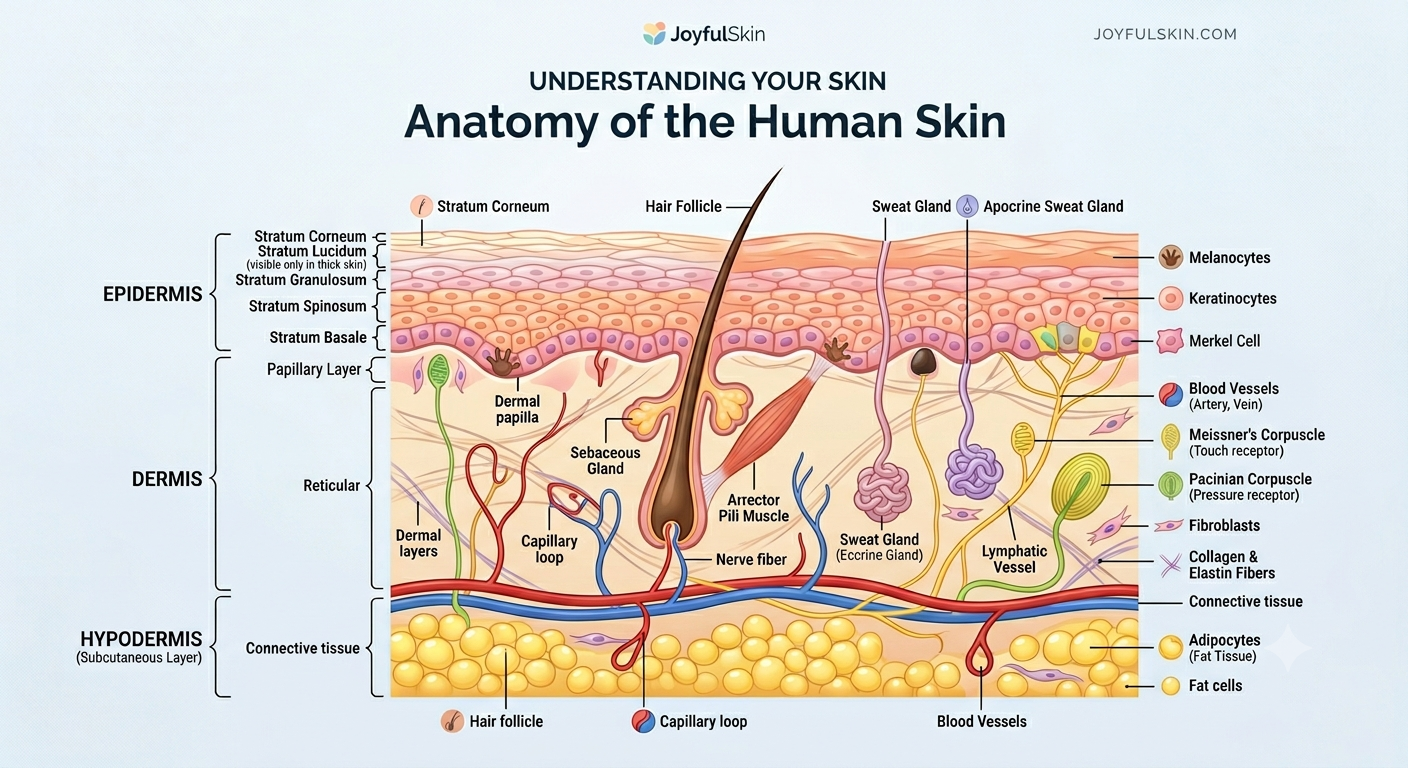
Skin is the largest organ of the human body. In adults, it covers roughly 20 square feet and accounts for about 15% of total body weight. More than a simple covering, skin is a complex living system composed of several layers, each with specialized roles that help maintain balance within the body.
The skin has three primary structural layers:
Epidermis – the outermost layer. This is where the skin barrier lives. The top portion, called the stratum corneum, is made of tightly packed cells and natural lipids that prevent moisture loss and block many environmental threats.
Dermis – the middle layer. This region contains collagen, elastin, nerves, blood vessels, and hair follicles. It provides strength, elasticity, circulation, and sensory awareness.
Hypodermis (subcutaneous layer) – the deepest layer, made mostly of fat and connective tissue. It cushions the body, stores energy, and helps regulate temperature.
Together these layers create a dynamic interface between your body and the outside world.
The Core Functions of Skin
Skin performs several vital roles that are essential for survival.
Protection
Skin acts as a shield against environmental threats such as bacteria, toxins, pollutants, and physical injury.
Water balance
Healthy skin prevents excessive water loss from the body while also protecting against over-absorption of external substances.
Temperature regulation
Through sweat glands and blood vessels, the skin helps regulate body temperature, keeping the internal environment stable.
Immune defense
Specialized immune cells in the skin detect and respond to pathogens.
Sensation
Millions of nerve endings allow the skin to detect touch, pressure, temperature, and pain.
Vitamin production
Exposure to sunlight triggers the skin to produce vitamin D, an important nutrient for bone health and immune support.
How Skin Defends Itself Naturally
Healthy skin does not rely solely on external products for protection. It already contains multiple built-in defense systems designed to keep the body safe.
1. The Skin Barrier (Lipid Barrier)
The outermost layer of the epidermis acts like a brick-and-mortar wall.
The bricks are skin cells (corneocytes).
The mortar is a mixture of natural lipids such as ceramides, cholesterol, and fatty acids.
This structure:
Locks moisture inside the skin
Blocks irritants and toxins
Prevents pathogens from entering the body
When this barrier becomes damaged, people often experience dryness, sensitivity, eczema flare-ups, or irritation.
2. The Acid Mantle
The surface of the skin maintains a slightly acidic pH, typically between 4.5 and 5.5.
This thin acidic film—made of sweat, sebum, and beneficial bacteria—helps:
Prevent harmful microbes from thriving
Maintain a healthy microbiome
Support proper enzyme function in the skin barrier
Products that are too alkaline can disrupt this system and leave the skin more vulnerable.
3. The Skin Microbiome
Your skin hosts billions of beneficial microorganisms—bacteria, fungi, and microbes that live on the surface.
While the word “bacteria” often sounds negative, many of these organisms are essential allies. They:
Compete with harmful pathogens
Support immune signaling
Help maintain healthy skin balance
Over-sterilizing the skin with harsh cleansers or antimicrobial ingredients can disrupt this protective ecosystem.
4. The Immune System of the Skin
The skin contains specialized immune cells that act as early warning systems.
These cells detect pathogens and trigger immune responses when needed. This system works together with the barrier and microbiome to create a multi-layered defensive network.
Why Your Skincare Should Support These Systems
Many modern skincare routines focus on over-correcting the skin—stripping oils, aggressively exfoliating, or sterilizing the surface. While these approaches may produce short-term cosmetic effects, they often weaken the very systems that keep skin healthy.
Skincare should ideally support the skin’s natural defenses rather than override them.
Products that respect the skin typically:
• Maintain the skin’s natural pH
• Avoid harsh surfactants that strip the barrier
• Provide lipids and nutrients that reinforce the skin barrier
• Avoid unnecessary synthetic irritants
• Work in harmony with the skin microbiome
When skincare aligns with the skin’s biology, the result is often stronger, calmer, and more resilient skin.
Why This Matters for Sensitive and Eczema-Prone Skin
People with eczema, dryness, or sensitive skin often have weakened barrier function. Tiny gaps form in the lipid structure of the skin, allowing moisture to escape and irritants to enter.
Supporting the skin with gentle cleansing, nourishing oils, and barrier-supportive ingredients can help reinforce the body’s natural defenses rather than overwhelm them.
This philosophy—working with the skin instead of against it—is the foundation of many botanical and minimal-ingredient skincare traditions.