Eczema, Skin Tone & Holistic Care
It All Begins Here
Understanding Triggers, Ingredients & Plant-Based Support for Healthy Skin
Eczema is a complex skin condition that can affect people of all ages and skin tones. While it often shows up as dryness, itching, or inflammation, how eczema appears, heals, and responds to care can vary depending on skin tone, barrier strength, and internal wellness.
At JoyfulSkin, we believe eczema-prone and compromised skin deserves gentle, intentional care—inside and out. This guide explores how eczema can present differently on lighter-toned and melanated skin, common triggers, and how plant-based skincare ingredients, foods, and herbal teas can support skin health holistically.
How Eczema Can Look Different by Skin Tone
Eczema on lighter-toned skin often presents as:
Red or pink patches
Visible inflammation or irritation
Burning or stinging sensations
Dryness paired with sensitivity
Because redness is more visible, flare-ups may be noticed early—sometimes before itching becomes severe.
Eczema on melanated skin may appear as:
Deep brown, purple, gray, or ashy patches
Thickened or leathery areas over time
Tightness or dryness before visible inflammation
Dark marks (post-inflammatory hyperpigmentation) after healing
Melanated skin can lose moisture more readily when the barrier is compromised, making consistent hydration and barrier support especially important.
Common Eczema Triggers (Across All Skin Tones)
Holistic practitioners often observe eczema flare-ups linked to:
Harsh soaps, detergents, and synthetic fragrances
Over-cleansing or very hot showers
Dry air, cold weather, or seasonal shifts
Stress and nervous system overload
Tight or synthetic fabrics that cause friction
While triggers may be shared, how skin responds and recovers varies, which is why individualized care matters.
Natural Skincare Ingredients That Support Eczema-Prone Skin
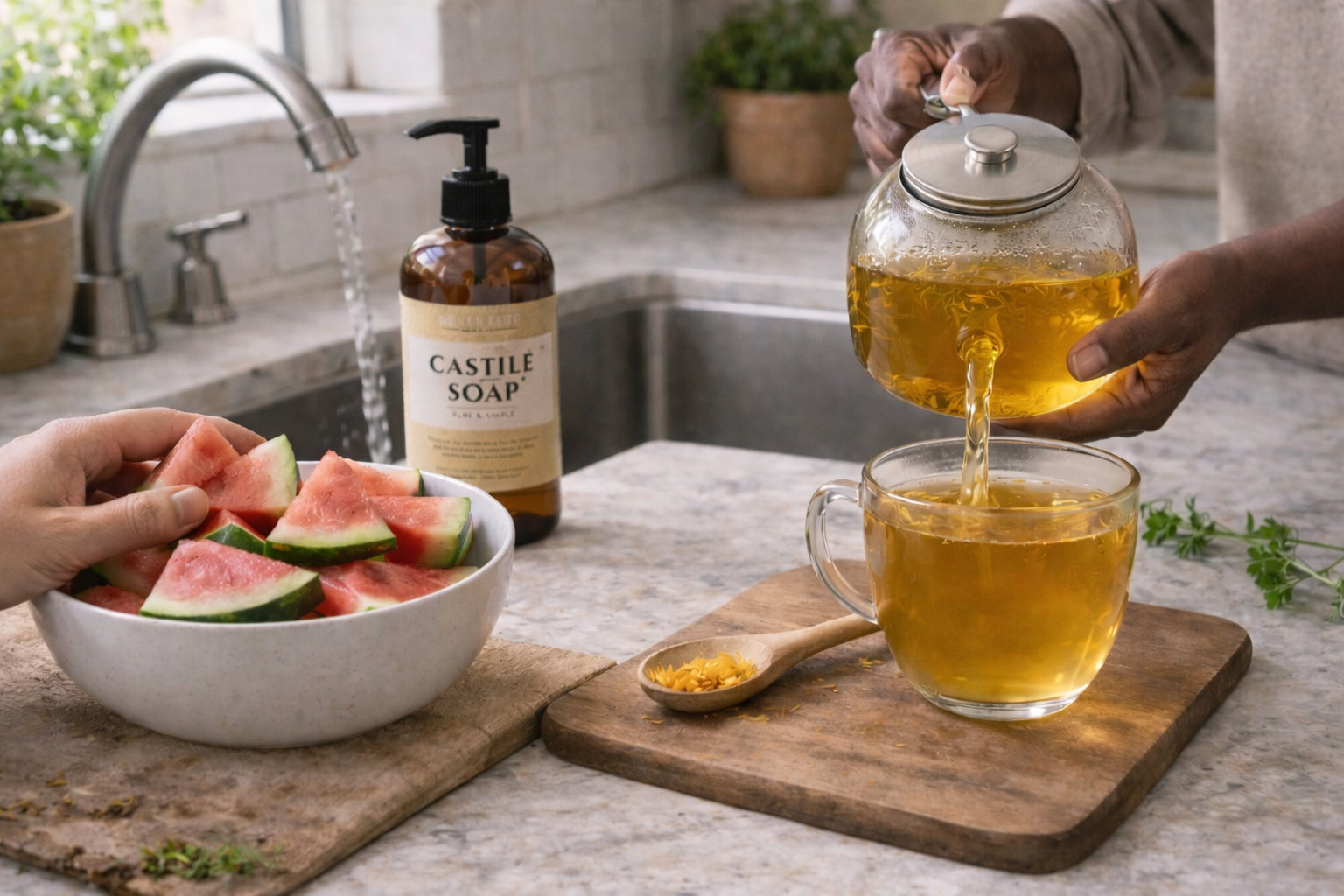
Castile Soap
Castile soap is a plant-based, gentle cleanser traditionally made from olive oil.
Cleanses without harsh detergents
Helps preserve the skin’s natural oils
Suitable for sensitive and compromised skin when properly diluted
Supports cleanliness without stripping the barrier
This makes it a foundational cleanser for eczema-prone routines.
Rosehip Seed Oil
Rosehip seed oil is rich in essential fatty acids and naturally occurring vitamins.
Supports skin barrier repair
Helps improve dryness and elasticity
Encourages a more even skin tone during healing
Lightweight and well-tolerated by sensitive skin
It’s especially helpful for skin recovering from flare-ups or dryness-related discoloration.
Coconut Oil
Coconut oil is deeply moisturizing and naturally protective.
Helps reduce moisture loss
Softens rough, flaky skin
Creates a breathable barrier to support healing
Naturally soothing for irritated areas
Used thoughtfully, it can provide comfort for both pale and melanated skin types.
Raw Honey
Raw honey has been used for centuries in skin care.
Naturally humectant, drawing moisture into the skin
Supports a healthy skin environment
Helps calm compromised or stressed skin
Encourages softness and comfort
Its gentle nature makes it ideal for eczema-prone formulations.
Vitamin E Oil
Vitamin E is a powerful antioxidant that supports skin resilience.
Helps protect skin from environmental stressors
Supports barrier repair
Improves softness and elasticity
Assists in reducing dryness and irritation
Vitamin E is especially beneficial for skin that feels fragile or depleted.
Shea Butter (Found as Shea Butter Soap Base in JoyfulSkin Bar Soap)
Shea butter is a deeply nourishing plant fat.
Rich in fatty acids that support barrier function
Helps relieve dryness and tightness
Soothes irritation and discomfort
Supports long-term moisture retention
Shea butter is particularly beneficial for melanated skin but supports all skin tones when the barrier is compromised.
Plant-Based Foods That Support Eczema-Prone Skin
Plant-focused dieticians often emphasize that skin health begins internally. Foods that support hydration, barrier strength, and inflammation balance include:
Omega-Rich Foods
Flaxseed
Chia seeds
Hemp seeds
Walnuts
These help support the skin’s lipid barrier and reduce dryness.
Antioxidant-Rich Fruits & Vegetables
Berries (blueberries, strawberries, blackberries)
Leafy greens (kale, spinach, collards)
Sweet potatoes
Carrots
Beets
These support skin repair and overall resilience.
Hydration-Supporting Foods
Cucumbers
Watermelon
Citrus fruits
Zucchini
Hydration plays a key role in maintaining elasticity and comfort.
Herbal Teas Traditionally Used for Skin Support
Holistic and herbal traditions often recommend gentle teas to support skin balance:
Chamomile Tea
Known for calming properties
Supports relaxation and stress reduction
Often used for sensitive or reactive skin
Nettle Leaf Tea
Rich in minerals that support skin health
Traditionally used for skin balance and nourishment
Rooibos Tea
Naturally caffeine-free
Rich in antioxidants
Often chosen for sensitive skin support
Calendula Tea
Traditionally used to support skin healing
Gentle and soothing
As with all herbal practices, listening to your body and introducing teas slowly is key.
Lifestyle & Nervous System Support
Eczema is often influenced by stress and overstimulation.
Prioritize consistent sleep
Create calming self-care rituals
Choose gentle routines over aggressive treatments
Allow the skin time to heal
Our Philosophy at JoyfulSkin
At JoyfulSkin, we intentionally formulate and curate with both lighter-toned and melanated skin in mind—focusing on moisture retention, barrier support, and thoughtfully chosen plant-based ingredients. We believe eczema care should feel inclusive, comforting, and empowering, honoring the skin’s natural rhythm and individuality.
If you’d like help choosing products or building a routine for sensitive or eczema-prone skin, we’re always here to support you.
This information is shared for educational purposes and reflects holistic skincare and wellness traditions. Individual needs may vary.