50 Most Common Synthetic Ingredients
Below is a broad overview of 50 of the most prevalent synthetic or highly processed cosmetic ingredients frequently used in mainstream skincare products. Many of these are considered safe within regulatory limits, despite known side effects produced from long term use.
Many of these ingredients are widely used because they’re inexpensive, shelf-stable, and easy to mass-produce—not because they support skin, health, or long-term well-being.
Preservatives
These extend shelf life by preventing microbial growth.Parabens (methylparaben, propylparaben, butylparaben, ethylparaben)
Phenoxyethanol
Benzyl alcohol
Imidazolidinyl urea
Diazolidinyl urea
DMDM hydantoin
Sodium benzoate
Potassium sorbate
Chlorphenesin
Benzalkonium chloride
Synthetic Emulsifiers & Surfactants
These help water and oils blend and create foam/cleansing action.
Sodium lauryl sulfate (SLS)
Sodium laureth sulfate (SLES)
Cocamidopropyl betaine
PEG-100 stearate
Polysorbate 20
Polysorbate 60
Polysorbate 80
Ceteareth-20
Laureth-7
Film Formers & Texture Agents
These create smooth texture or help products spread and adhere.
Carbomer
Acrylates copolymer
Polyacrylamide
Nylon-12
Polyethylene
Synthetic Stabilizers, Chelators & Miscellaneous Additives
Disodium EDTA
Tetrasodium EDTA
BHT (butylated hydroxytoluene)
Propylene glycol
Butylene glycol
Triethanolamine
Synthetic Fragrance & Aroma Components
Often listed simply as “fragrance” or “parfum.”
Synthetic fragrance/parfum
Linalool (synthetic form commonly used)
Limonene
Citral
Hexyl cinnamal
Butylphenyl methylpropional (Lilial)
Alpha-isomethyl ionone
Petrochemical-Derived Emollients & Occlusives
These create slip, softness, and water-barrier effects.
Petrolatum (petroleum jelly)
Mineral oil
Paraffin
Microcrystalline wax
Polyisobutene
Isopropyl myristate
Isopropyl palmitate
Silicones
Used to create a silky texture and smooth finish.
Dimethicone
Cyclopentasiloxane
Cyclohexasiloxane
Trimethicone
Amodimethicone
Dimethiconol
FAQs
Why should I avoid synthetic ingredients in skincare?
Not all synthetic ingredients are harmful, but many conventional skincare products rely on synthetic preservatives, fragrances, and petroleum-derived fillers to extend shelf life, create scent, or improve texture. Some of these ingredients have been associated with skin irritation, allergic reactions, hormone disruption concerns, or unnecessary chemical exposure—especially for people with sensitive, eczema-prone, or compromised skin.
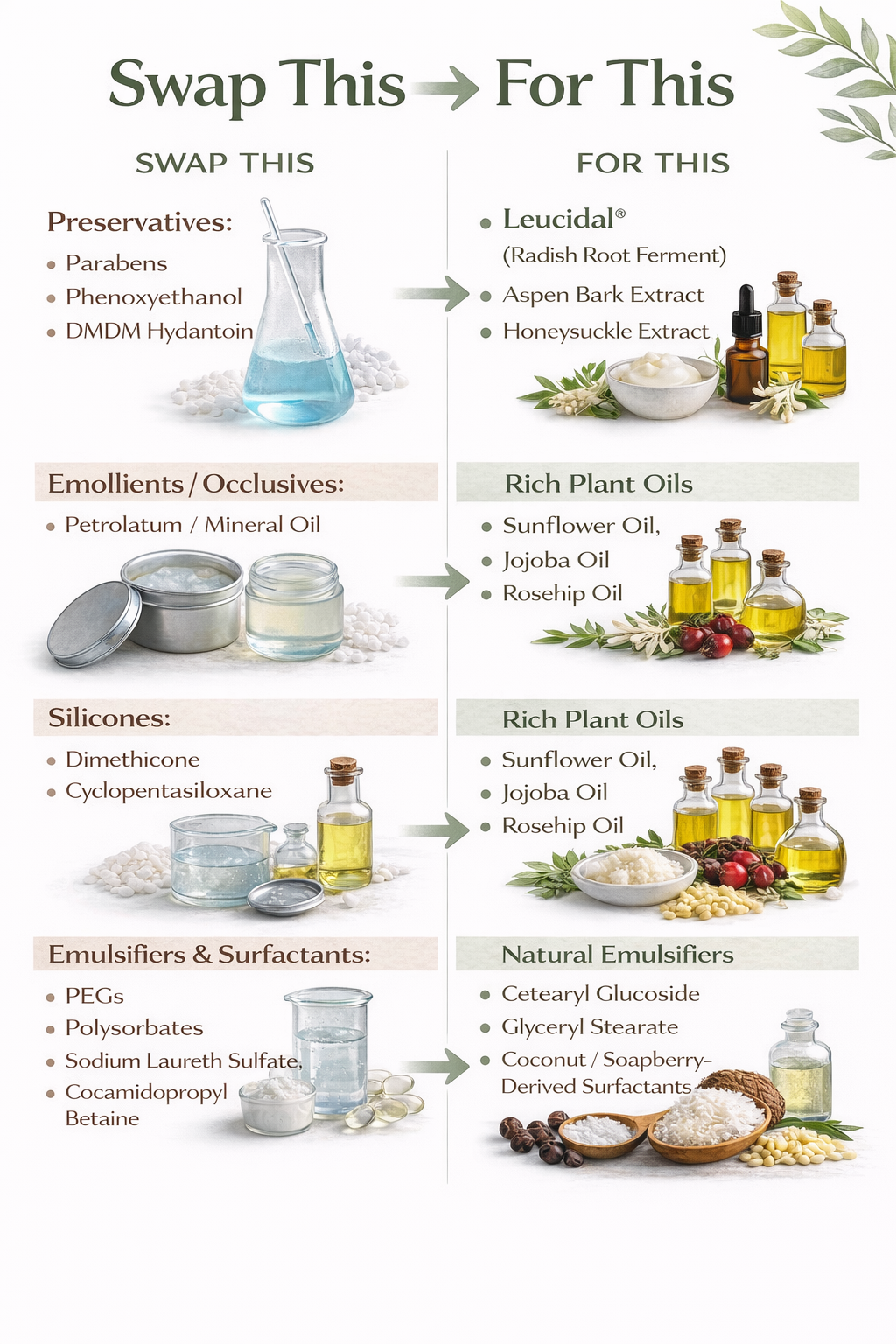
Choosing products made with simple, plant-based ingredients allows many people to better understand what they’re putting on their skin and avoid ingredients that may aggravate dryness, inflammation, or sensitivity. Botanical oils, butters, and herbs—like rosehip seed oil, sunflower oil, calendula, and raw honey—can nourish the skin while minimizing unnecessary additives.
For many people, the goal isn’t perfection—it’s reducing exposure to ingredients that don’t actively benefit the skin.
Where can I quickly look up ingredients or products to see if they may be toxic?
One of the easiest and most trusted tools is the Environmental Working Group’s Skin Deep® Database (EWG Skin Deep).
This free online resource allows you to:
Search individual ingredients
Look up entire skincare products
See safety ratings and research summaries
Understand potential concerns such as irritation, allergies, or environmental impact
Simply visit EWG’s Skin Deep database, type in the product or ingredient name, and it will provide a safety rating along with explanations of how the ingredient is used in cosmetics.
It’s a quick way to become a more informed consumer when evaluating the products already in your routine.
If I switch to natural skincare, will it actually work as well as conventional products?
Yes—when the ingredients are thoughtfully chosen.
Many conventional products rely on synthetic fillers, silicones, and fragrances to create the feeling of effectiveness (such as temporary smoothness or strong scent), but those ingredients don’t necessarily improve long-term skin health.
Natural formulations often focus on nutrient-dense ingredients that support the skin barrier, such as:
Rosehip seed oil for essential fatty acids and skin renewal
Sunflower oil for lightweight moisture and barrier support
Jojoba oil, which closely mimics the skin’s natural sebum
Shea butter for deep hydration and protection
Because these ingredients work with the skin rather than coating it, people with dry, sensitive, or eczema-prone skin often find their skin becomes calmer and more balanced over time.
Natural skincare may sometimes feel different at first—lighter scents, simpler textures—but many people discover their skin responds better when it isn’t constantly exposed to unnecessary additives.